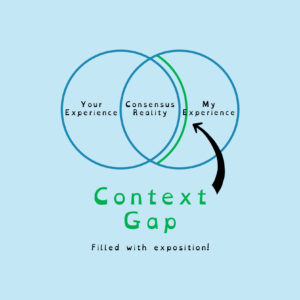
Venn diagram of Consensus Reality. CC-BY-SA-4.0 Keelan Powell
Episode Credits
Host: Keelan Powell
Special Guests: Holly Dear and Camila Pardo Uribe
Producers: Keelan Powell, Holly Dear and Camila Pardo Uribe
Audio editor: Keelan Powell
Show notes: Clare Boon
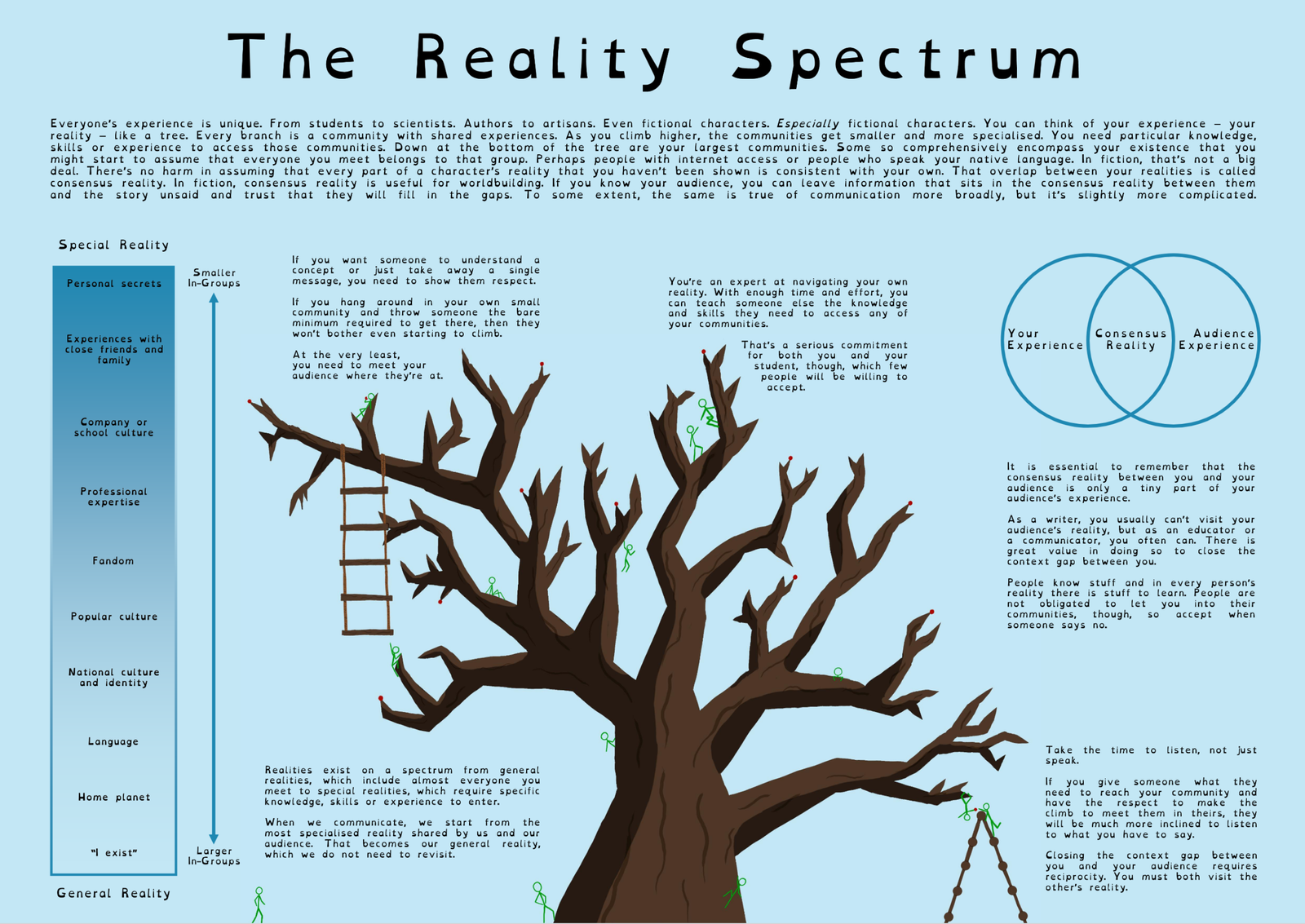
Your reality is like a tree. Each branch is a community whose experiences you share, but as you climb higher, those communities narrow. Your shared experiences become more and more specialised: a ‘special reality’. To get to the outermost branches, you need particular knowledge, skills, or experience. At the bottom of the tree, however, you share a common experience of reality with so many people, you could call it a ‘general reality’. But we sometimes forget it is still part of our great reality tree. Like shared language. Or internet access. That shared reality, the bit we forget is the trunk holding us up? That’s our Consensus Reality. It’s the part we both need to know, and don’t always need to voice, in communication.
In this episode, Master of Science Communication graduate Keelan investigates the concept of ConsensusReality with students Holly and Camila, discussing how this relates to our work as science communicators. They delve into the theory behind the concept, along with the intricacies of mimesis and fiction. The discussion touches on concepts including positionality, the impact of lenses, and the importance of context.
Get your climbing gear ready.
“Take the time to listen, not just speak. You have to trust what others tell you.” – Keelan Powell
We love hearing everyone’s stories of how they got into science communication. What about you? What brought you here? Feel free to share in the comments!
We acknowledge, with respect, the Whadjuk people of the Noongar Nation as the Traditional Custodians of the land on which we work and produce The SciComm Collective, and pay our respects to Elders past and present. We extend our respect to all Aboriginal and Torres Strait Islander peoples.
All opinions on this website are representative of individuals and are not representative of The University of Western Australia. The University of Western Australia is not liable for content herein.

1 Comment
[…] Episode 2.4: Student Roundtable – Consensus Reality – thescicommcollective.com17 March 2026 at 12:07 pm […]