Episode 3.7: Getting science seen: Communicating for engagement and impact
How do scientists create impact with their research?
Episode Fast Facts
Time: 31 minutes
“You’ve got to get your research to the people who are going to use it… You’ve got to go to where the community is.”
– Sarah Brooker
Episode Host:Emma Gill, Camila Pardo Uribe
Episode Guest: Sarah Brooker, Managing Director of Science in Public
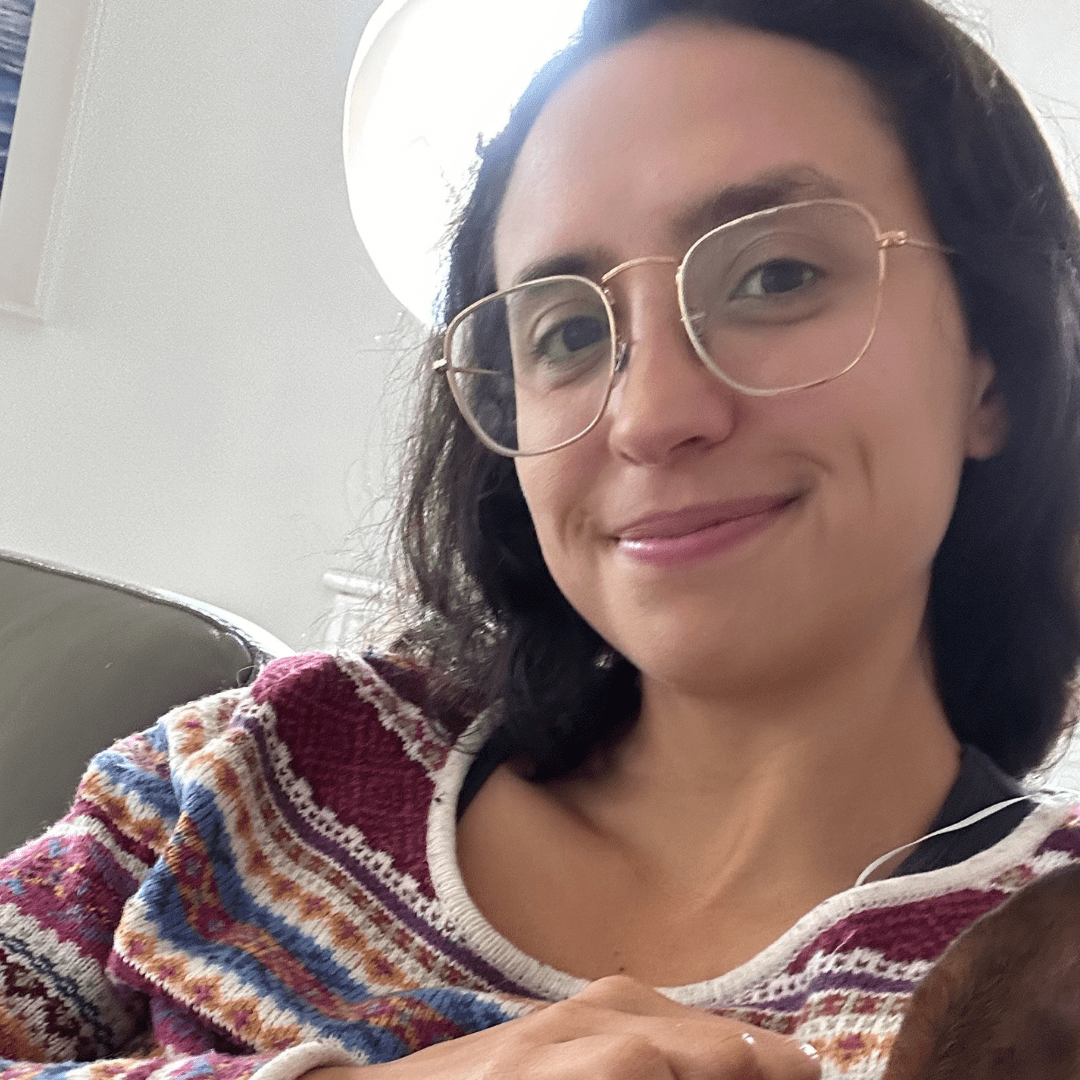
Sarah in her courtyard. Image supplied by Sarah Brooker
Episode Credits:
Hosts: Emma Gill, Camila Pardo Uribe
Guest: Sarah Brooker
Producer: Ke Yuan
Content Editor: Ke Yuan
Sound Editor: Matt Gill
Research: Ke Yuan, Camila Pardo Uribe, Emma Gill
Show notes: Emma Gill, Ke Yuan
Audiogram created using: Adobe Podcast
How do scientists create impact with their research?
In this episode, Science in Public’s Sarah Brooker talks to Camila and Emma about her work at “Australia’s Science PR Company” and why Public Relations (PR) isn’t a dirty word – it’s a proactive one. She shares how important it is to share the processes of science along the way in any project, and about knowing how to reach the right people.
Sarah draws on her years of experience helping researchers shape their stories to reach their intended audience. From changing animal handling practices to instigating policy change, Sarah and her team help tailor messages for different audiences and purposes, with a focus on collaboration so everyone has a share in the story. Camila and Emma discuss the ins and outs of working with media and scientists, and how science communication careers can play a role in many different ways.
“Putting your story out there… you have control over how you position it. And the more preparation you can do, telling your story in your own words – that’s you owning that landscape.”
New research that considers how AI and changes in trust may be changing media-science relationships – by de Jong and Dijkstra (2026), Open Access – https://doi.org/10.1177/02704676261452144
We love hearing everyone’s stories of how they got into science communication. What about you? What brought you here? Feel free to share in the comments!
We acknowledge, with respect, the Whadjuk people of the Noongar Nation as the Traditional Custodians of the land on which we work and produce The SciComm Collective, and pay our respects to Elders past and present. We extend our respect to all Aboriginal and Torres Strait Islander peoples.
All opinions on this website are representative of individuals and are not representative of The University of Western Australia. The University of Western Australia is not liable for content herein.