Episode 2.2: Writing for Children with Pamela Freeman
How do you make kids say "wow" about science?
Episode Fast Facts
Time: 34 minutes
“You’re looking to get an emotional reaction out of them.”
— Pamela Freeman
The Collective: Emma Gill, Clare Boon
Special Guests: Pamela Freeman
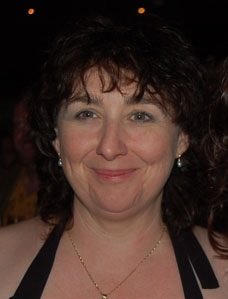
Pamela Freeman at the Aurealis Awards. Photograph by Catriona Sparks. Licensed under CC BY 2.0.
Episode Credits
Guests: Pamela Freeman
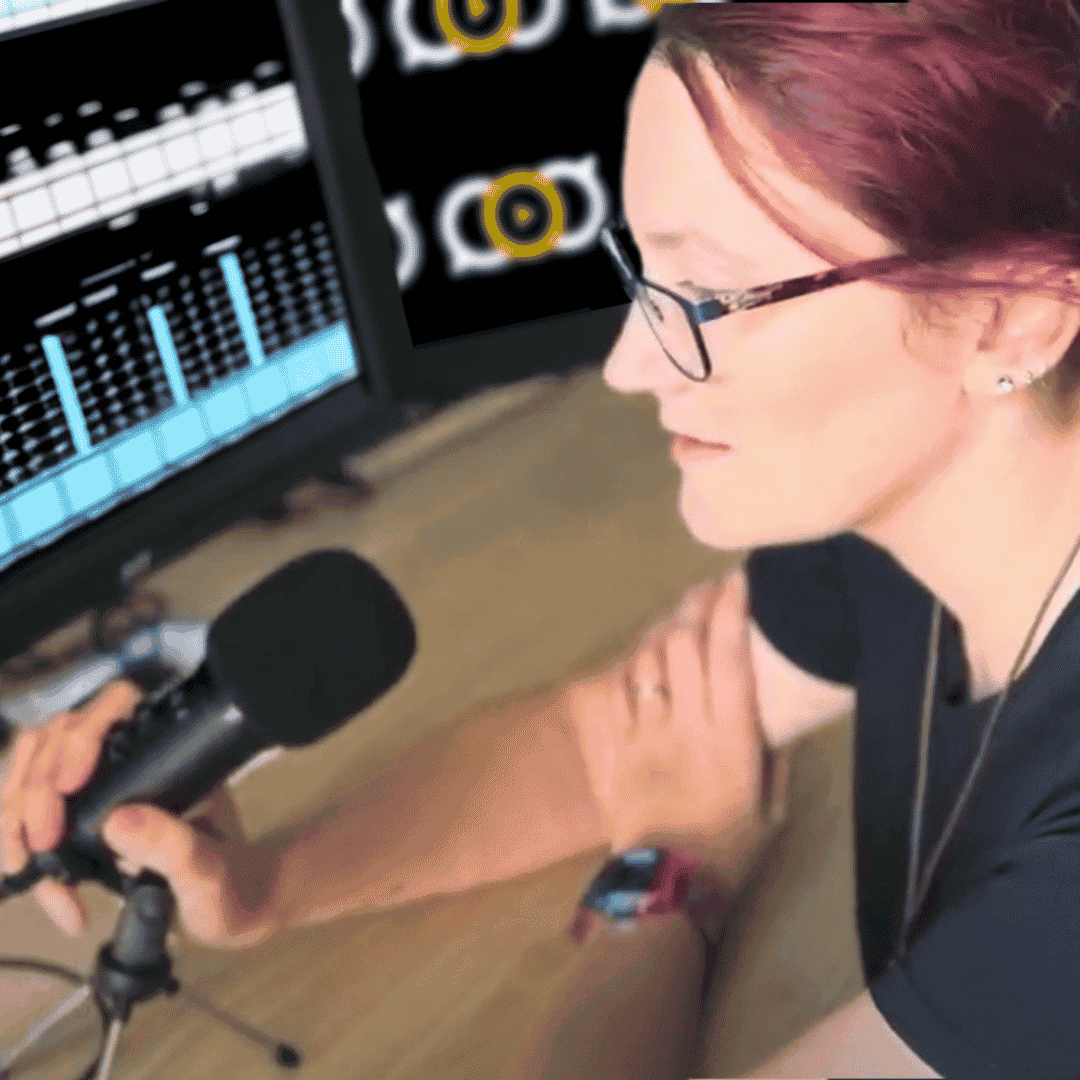
Host: Emma Gill
Producer: Emma Gill
Audio Engineering & Editing: Matthew Gill
Show notes: Clare Boon
Audiogram by Headliner.app
Join Emma today as she talks to children’s book author Pamela Freeman. They discuss how Pamela got into writing ecological picture books for children, where her ideas come from, and how they align with the national curriculum. Pamela explains how she best engages children with her books and how her unconventional relationship with her current illustrator is integral to the work she does. They discuss the process of getting a picture book published and how to evaluate if your work has had an impact.
“The idea that science doesn’t know everything blows their mind.” – Pamela Freeman
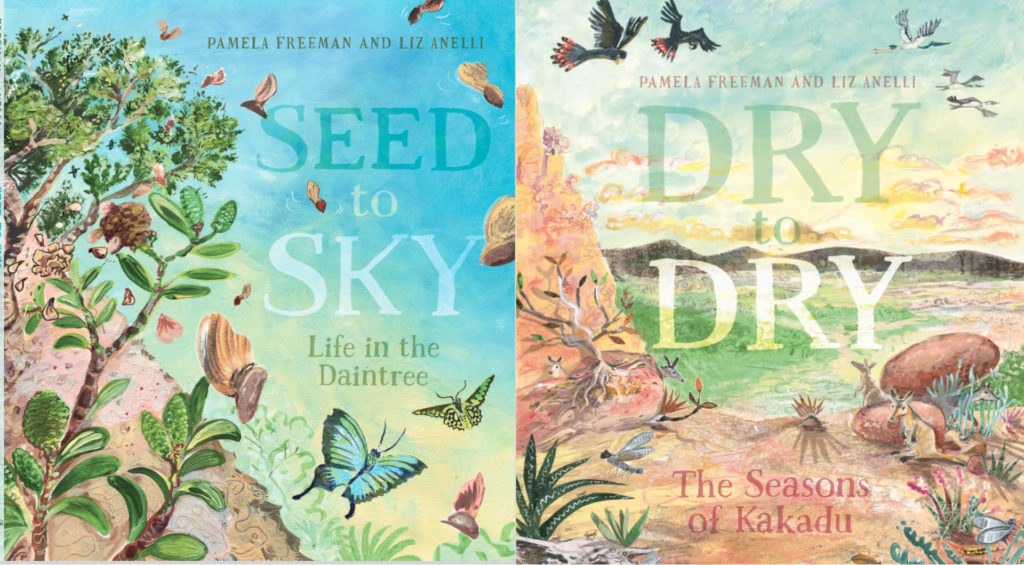
The stunning cover art for Seed to Sky: Life in the Daintree and Dry to Dry: The Seasons of Kakadu. Illustrated by Liz Anelli.
The Collective on this episode:
Emma Gill
Host, Producer
Clare Boon
Research, Governance
We love hearing everyone’s stories of how they got into science communication. What about you? What brought you here? Feel free to share in the comments!
We acknowledge, with respect, the Whadjuk people of the Noongar Nation as the Traditional Custodians of the land on which we work and produce The SciComm Collective, and pay our respects to Elders past and present. We extend our respect to all Aboriginal and Torres Strait Islander peoples.
All opinions on this website are representative of individuals and are not representative of The University of Western Australia. The University of Western Australia is not liable for content herein.