“In terms of inclusive science communication, it’s ensuring everyone has a voice and everyone has access to then read that science... Anyone can speak to us about science, and anyone can read about that as well.”
– Cat Williams
Episode host:Camila Pardo Uribe, Kelly Hopkinson
Episode Guest:Cat Williams, Digital Content Editor of Particle Magazine
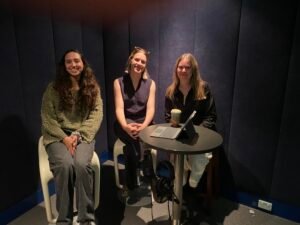
Left to right: Camila Pardo Uribe, Kelly Hopkinson, and Cat Williams in the recording studio.
Episode Credits:
Host: Camila Pardo Uribe, Kelly Hopkinson Guest: Cat Williams Producers: Camila Pardo Uribe Editor: Camila Pardo Uribe Sound engineering: Matt Gill Researchers: Camila Pardo Uribe Show notes: Camila Pardo Uribe
Keywords:
Science communication, inclusive science communication, science stories, The SciComm Collective, science communication careers, science journalism, Particle Magazine
Welcome back to Season 3 of The SciComm Collective! In this season we’re talking about how science stories get into public spaces like news, magazines, theatre, parks, museums, science centres, and youth groups.
Today‘s episode features Cat Williams, Particle Magazine’s Digital Content Editor and science journalist extraordinaire.Join Kelly and Camila as they discuss Cat’s contributions to Australia’s science media landscape as a science journalist and editor for one of Western Australia’s most prominent digital science outlets. They talk about the joys and challengesof communicating science to different audiences,trying to keep up with their needs and what drew them all to the world of science writing and journalism. Cat shares some insights into what a science story is, what writing and editing for younger audiences entails, helping science writers find their voice and her vision for Australia’s current science media ecosystem. Tune in now and click on the links below to find out more about Cat’s work!
“There’s a lot going on in the world, And I think that sometimes science gets dropped a little bit … But in terms of media as a whole, it’s there. And I think there’s a lot more work to do, but I think it’sclawing its way … There is space for science in breaking news.”
Get your copy of The Best Australian Science Writing 2025 here
Find out more about Cat’s nomination for the Kat Muscat Fellowship here
The Collective on this episode:
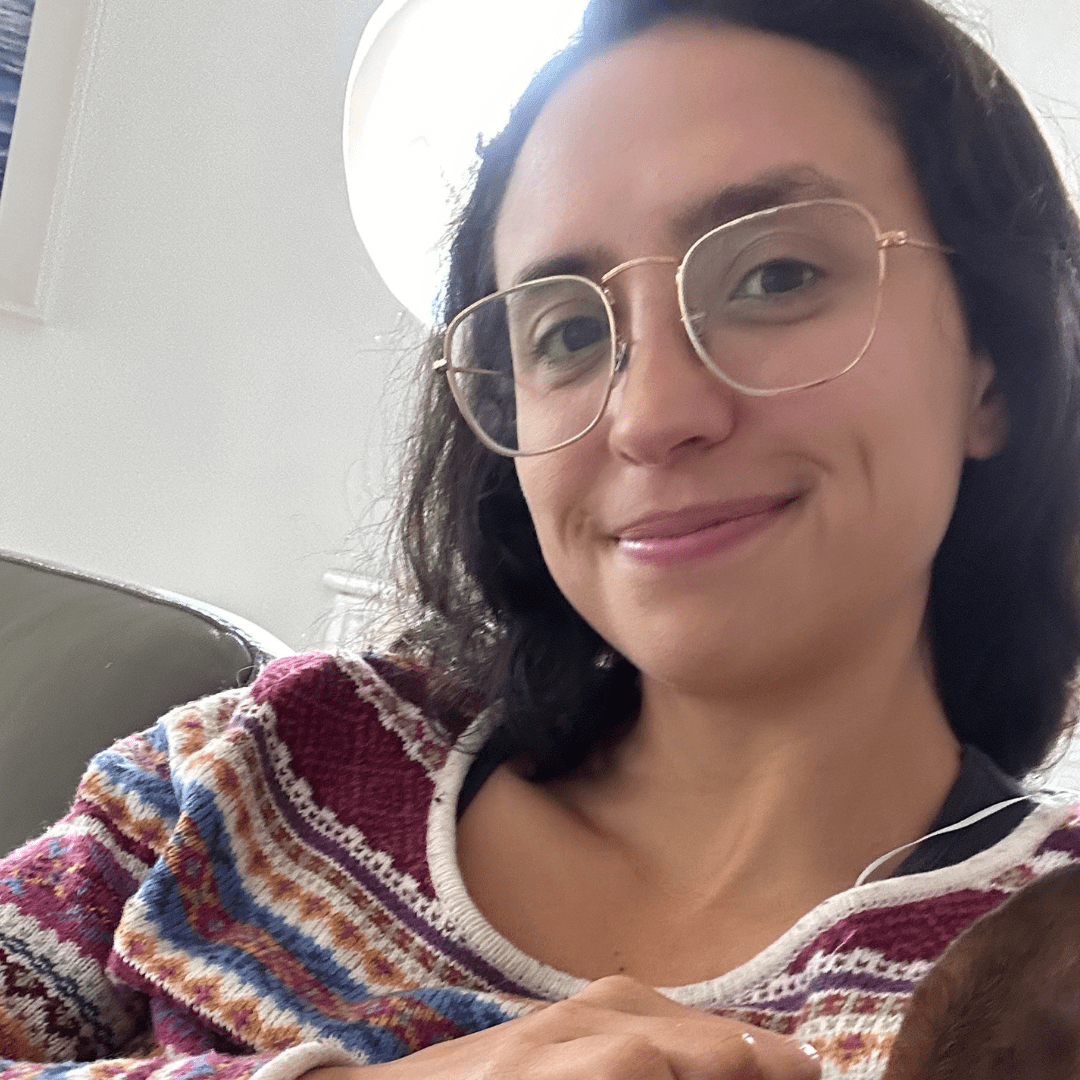
Camila Pardo Uribe
Host, Producer, Editor, Researcher, Shownotes
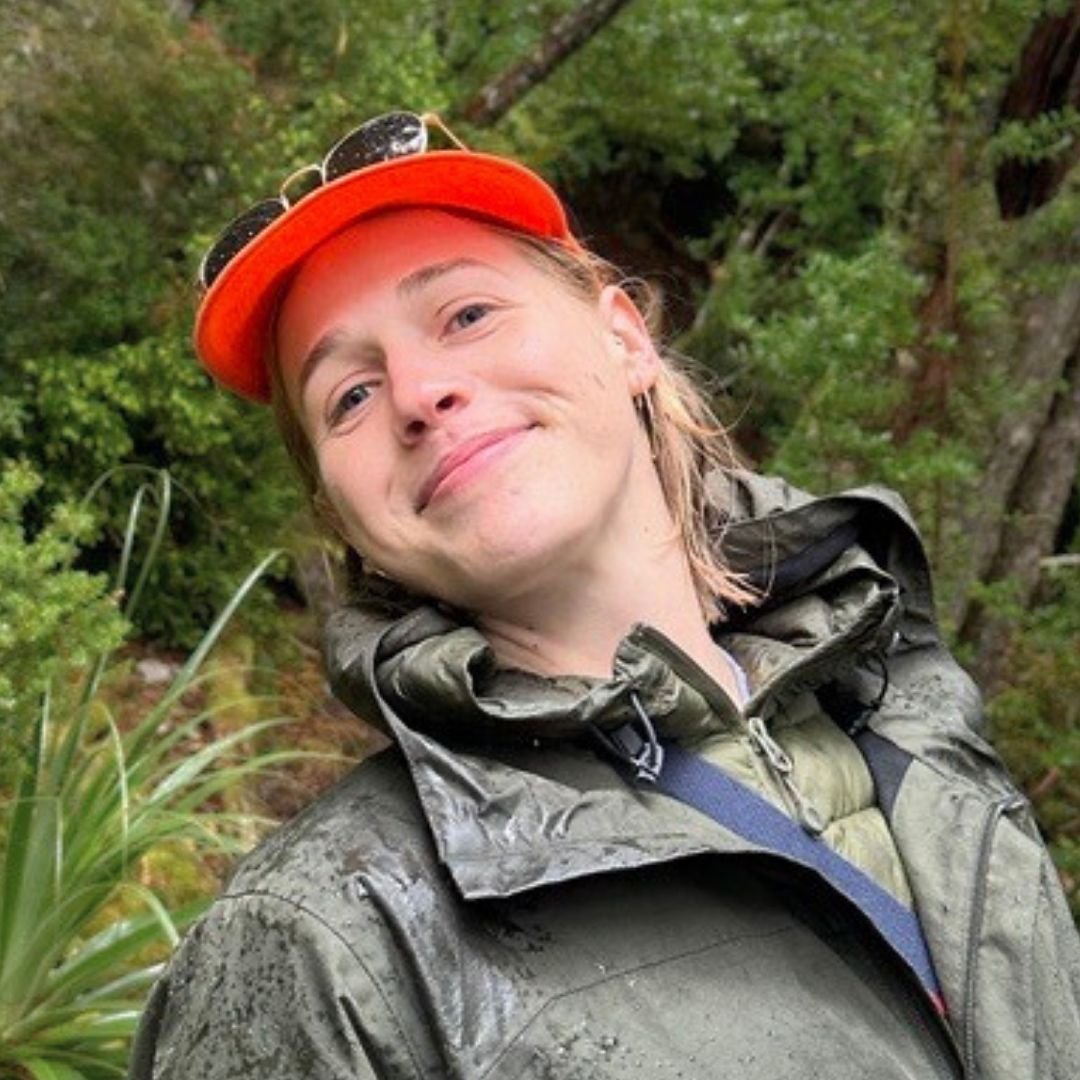
Kelly Hopkinson
Host
Cat Williams
Guest
Matthew Gill
Audio Editor
We love hearing everyone’s stories of how they got into science communication. What about you? What brought you here? Feel free to share in the comments!
We acknowledge, with respect, the Whadjuk people of the Noongar Nation as the Traditional Custodians of the land on which we work and produce The SciComm Collective, and pay our respects to Elders past and present. We extend our respect to all Aboriginal and Torres Strait Islander peoples.
All opinions on this website are representative of individuals and are not representative of The University of Western Australia. The University of Western Australia is not liable for content herein.