Episode 3.8: Science Communication as Social Epistemology
How do we draw the limits of knowledge and expertise – and what's the role of science communication in it?
Episode Fast Facts
Time: 31 minutes
“If science communication is the social conversations around science … I think we are the curators of these conversations.”
– Fabien Medvecky
Episode Host:Camila Pardo Uribe, Dr Heather Bray
Episode Guest: Fabien Medvecky, Associate Professor at The Australian National University, President of the Network for the Public Communication of Science and Technology (PCST)
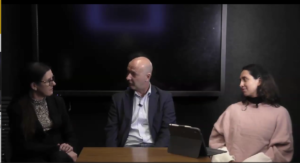
Left to right: Dr Heather Bray, Fabien Medvecky and Camila Pardo Uribe in the recording studio.
Episode Credits:
Hosts: Camila Pardo Uribe, Dr Heather Bray
Guest: Fabien Medvecky
Producer: Camila Pardo Uribe
Sound Editors: Hari Krishna Gami, Camila Pardo Uribe
Audio Engineering: Matt Gill
Show notes: Camila Pardo Uribe
Audiogram: Adobe Podcast
Join Camila and Dr Heather Bray as they deep dive into what science communication as social epistemology is from the perspective of science communicator academic Fabien Medvecky. Fabien offers his insights about being a social scientist in the discipline of science communication, and they discuss why physical sciences are usually privileged in a space with a clear social component.
Fabien discusses why “not everything goes” when it comes to epistemic inclusion and bringing multiple worldviews and knowledges in the conversation around science, as well as the reasons why it’s important to consider the why of working with diverse knowledge holders. Camila draws on her experiences working with First Nations and the importance of epistemic humility, and Fabien reflects on his role as president of the Public Communication of Science and Technology (PCST) Network and what the position has taught him about the importance of curating culture in workspaces.
“The idea of doing good science communication is often defined in terms of effectiveness. My interest is how we do it morally well … and the moral implications of what we do.”
We love hearing everyone’s stories of how they got into science communication. What about you? What brought you here? Feel free to share in the comments!
We acknowledge, with respect, the Whadjuk people of the Noongar Nation as the Traditional Custodians of the land on which we work and produce The SciComm Collective, and pay our respects to Elders past and present. We extend our respect to all Aboriginal and Torres Strait Islander peoples.
All opinions on this website are representative of individuals and are not representative of The University of Western Australia. The University of Western Australia is not liable for content herein.