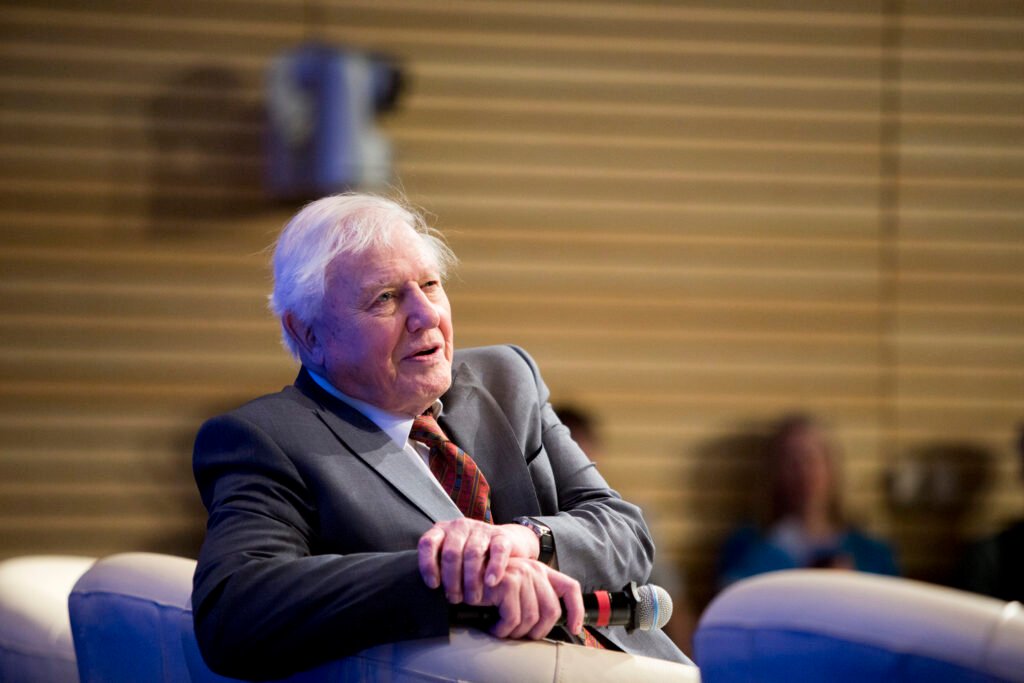
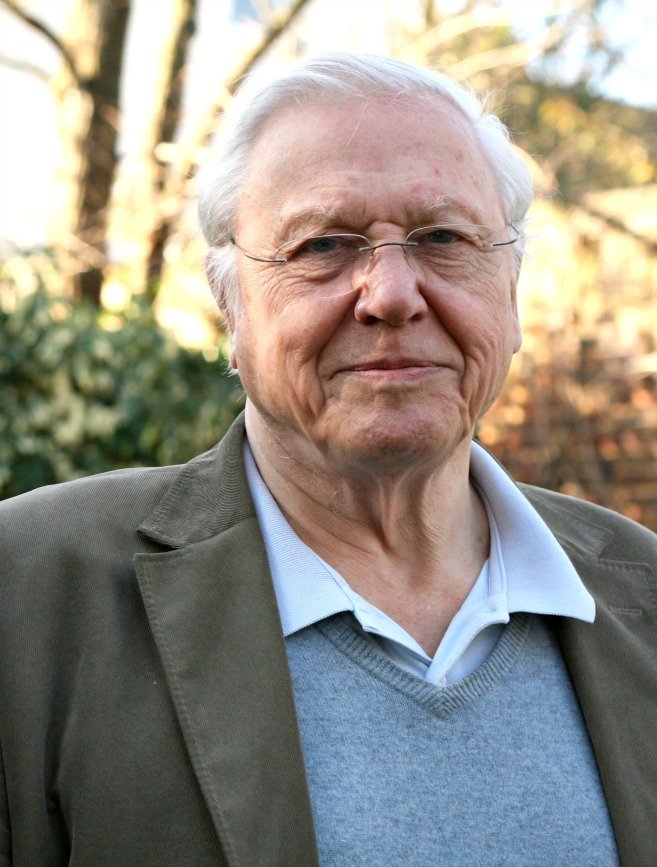
Sir David Attenborough has had an undeniable impact in the lives of scientists and science communicators around the world. To say that he is an icon to many of us would be an understatement. He was our first introduction to the wonders of the natural world, the soundtrack to our childhood, and his documentaries the force that drove us towards our own journeys into science and science communication. This is what some of UWA’s students had to say to Sir David.
Dear Sir David Attenborough,
Thank you so much for your incredible contribution to nature and science, and most of all, for sharing your passion. You are utterly irreplaceable, and inspire us homo sapiens to live with curiosity, courage and respect. Your documentaries are captivating and humbling, speaking to everyone, and have influenced my life greatly, and shall continue to do so.
Always fascinated by the natural world, I was entranced by your productions from a young age. Blue Planet, Planet Earth and First Lifewere played on repeat, and unsurprisingly, my playtime always involved animals (and dinosaurs). My parents were always happy to oblige my frequent requests to visit zoos, museums and aquariums. Another fan, my year two teacher, further guided my passion towards marine biology when she brought shark eggs to class. This resonated with me and two years later I recognised one at the beach. If not for loving nature, your documentaries and that science lesson, I doubt I would be who I am today. My interest in shark eggs determined the high school I attended (the principal and I were both collectors). When I was 11, I was lucky enough to discover and take home a stranded cuttlefish egg, then hatch (on the family dining room table) and release it, with the help of my mother. I named him Bud, and we bonded over the weeks as he developed. Although tiny, he possessed a big personality. Always fascinating to watch, he flipped inside his egg case when addressed. This experience made me feel like I was living one of your documentaries and more deeply appreciate the wonders of the ocean.
Now studying medicine, I reflect on my childhood curiosity growing exponentially through many viewings of your intriguing documentaries that brought the world to my living room. Nature greatly helps me interconnect new content in my studies.
Sir David Attenborough is the ultimate teacher of all things science, and will always will be the unique face and voice that communicates the necessity for us to learn about and care for our planet.
-Lotte George
Dear Sir David,
Twenty years ago, I watched you on screen in a lecture theatre with fellow Zoology Club students as your rib raced through the water alongside the world’s largest living mammal. A blow, a back, a dive. Spray in the air. The screen was shades of blue: pale blue sky, dark blue ocean, grey-blue animal sluicing through transparent blue waves. The whale was incredible. The cinematography was thrilling. Your joy was infectious. I knew then my chosen career in marine biology was the right place for me.
Except, of course, it wasn’t. Priorities change, new ideas come in, and paths shift along the way. I did marine biology for a few years, sure – studying bottlenose dolphins in the Moray Firth, Hector’s dolphins in Banks Peninsula, humpback whales on both coasts of Australia, and even blue whales as they migrated through Geographe Bay. Being on the water was incredible. But science is full of statistics, and maths is not my strong point. Stories, though. Stories, I love.
I became a teacher. High school, early childhood, everything in between. In schools, in conservation centres, in a zoo, an aquarium, a science festival or two. Throughout, your documentaries continued to spread awe and wonder around the Western world. I shared National Geographic and Double Helix magazines with my teenaged students. I channelled your joy when handling animals to showcase at the zoo. The message of conservation, of care as well as wonder, was always forefront in my mind. We have to look out for our beautiful world. We have a responsibility, you said.
I learnt about palm oil production destroying rainforests. I volunteered for Greenpeace Australia-Pacific on a campaign to label canned tuna with transparency about species fished, how, and where. I worked with another NGO on a campaign for marine protected areas in Australia’s southwest. I taught people from toddlers through to tertiary education, and always the question in my mind was, why don’t other people see the same thing I do? How do they not share the wonder and care for our planet’s richness? What can I do – what can anyone do – to break through our daily struggles and bring people into a collective movement for something that is bigger than each of us?
It was this question which brought me to where I am now: studying science communication. But in science communication, I found that my feeling that something was missing was not as black and white as it had seemed. It’s not ‘conservationists’ against everyone else. It’s not a ‘lack of care’ or ‘lack of awareness’ driving us ever on to global destruction and collapse. It’s also not as bleak as all that, either.
We live complicated lives in a complicated world. Every day, forces both beyond and within our control shape our every minute. It’s exhausting to think about. To be frank, it’s either a necessity or a privilege to do so. The middle ground, the place where many (Westerners, in particular) inhabit, that’s a place that’s hard to break into. A space where priorities and values vary, time is precious, and competition for attention is extreme. The fact that so many millions around the world love your documentaries, love your messages of joy, wonder, and care, speaks to the power of attention that has been afforded to you, that you have worked so hard to gain. So many people have been affected by you in their lives. Have made changes for good because of you.
From those early origins searching for novelty, to showcasing species and places and wonder, to raising awareness of conservation issues via lessons in history, and science, and sociology, to your newest messages of hope and possibility… You made a difference, Sir David. You make a difference. You are heard. Our planet thanks you.
(I do also recognise the significant contribution of your teams and collaborators along the way. As you have said, this is not something you could have done alone. You are the face, the voice, of so many. Thank you also to all of them.)
I took my children to see Ocean. The trawlers destroying the ocean floor – something which 20 years ago I’d only imagined from the pictures of the destruction they left behind – it had us all in tears. The scale of humanity’s hubris. The complexity of our struggle for growth versus survival, versus thriving. Versus care. Then the change. The message that all is not lost. That we still have time to make a difference. The blue whale surfacing, the coral regrowing.
My children love you and all that you represent. As do I. Because you represent a message. That we can change. That people are not a lost cause, that our planet is not beyond repair. That middle class, white, Western men in positions of public influence can be forces for good. That we can start a journey with one intention and end up somewhere completely unexpected.
I’ve heard that you read all your letters. Admirable, I’m sure – but it’s ok if you don’t read mine. I write this as catharsis; a reflection, in a way. Perhaps we should all write letters to those we admire every now and again, to see why. To understand ourselves a little more. To uncover what it is that really matters.
Your voice has mattered. It still does. Thank you for using it to tell stories that make a difference. For your science communication. For your care. For your inspiration, and your legacy.
Happy 100th birthday, Sir David.
-Emma Gill
Dear Sir David,
Dear Sir David,
Writing these words feels a lot like shouting in a vacuum. These words will never reach you – but I’m okay with that. I find comfort in this fact as it means I can be honest. Some people have vivid memories of seeing your work for the first time or (if lucky enough) meeting you. I have never met you – and I don’t think I will. I can’t really pinpoint a specific piece of your work that I can name as my favourite, in all fairness. But I see this letter as an opportunity to share what your work has made me feel throughout the years, because that’s what that I’ve carried with me.
For as long as I can remember, I wanted to be out in nature. I wanted to travel to the most remote places known to humankind and write about them. I wanted people to care about our planet, to know what is at stake if we continue down a path of destruction. Almost 30 years later, I’m living in the most isolated capital city in the world and take a lot of pride in calling myself a science communicator, but I haven’t seen all the places I wanted to (not yet at least). However, I’ve had your documentaries in the meantime whenever I feel like seeing the places that I long to see one day.
Your work has played a great part in driving me towards my goal. As a science communicator, I can’t help but feel deeply moved by the things you’ve done. I firmly believe that anything narrated by you has the power of tugging at anyone’s heartstrings. Watching A Life On Our Planet had me in tears and wondering how we, with all the knowledge that we have at our disposal, continue to be indifferent to the lament of our more-than-human planet mates. While I tend to be a rather pessimistic person, your work fills me with a renewed sense of hope and a desire to keep fighting the good fight. And it makes me want to keep the conversation alive, because there is hope, as well as power in feeling. Because I’m a firm believer that feelings can drive change. Thank you for showing me that.
How can someone you’ll never meet have such an impact in your life – and feel so close to home? If I could ask you one thing, it would be this. You’ve shown many of us that a career in science communication is not only possible, but necessary if we want to safeguard the wellbeing of future generations. I feel grateful for your persistence and your love for our natural world.
A hundred years on Earth is no small feat. But even more significant is the legacy you’ll leave behind.
Happy centenary, Sir David Attenborough.
May you find comfort in the fact that even a pessimist like myself wouldn’t be where she is if it wasn’t for the work that you have done.
-Camila Pardo Uribe
All opinions on this website are representative of individuals and are not representative of The University of Western Australia. The University of Western Australia is not liable for content herein.