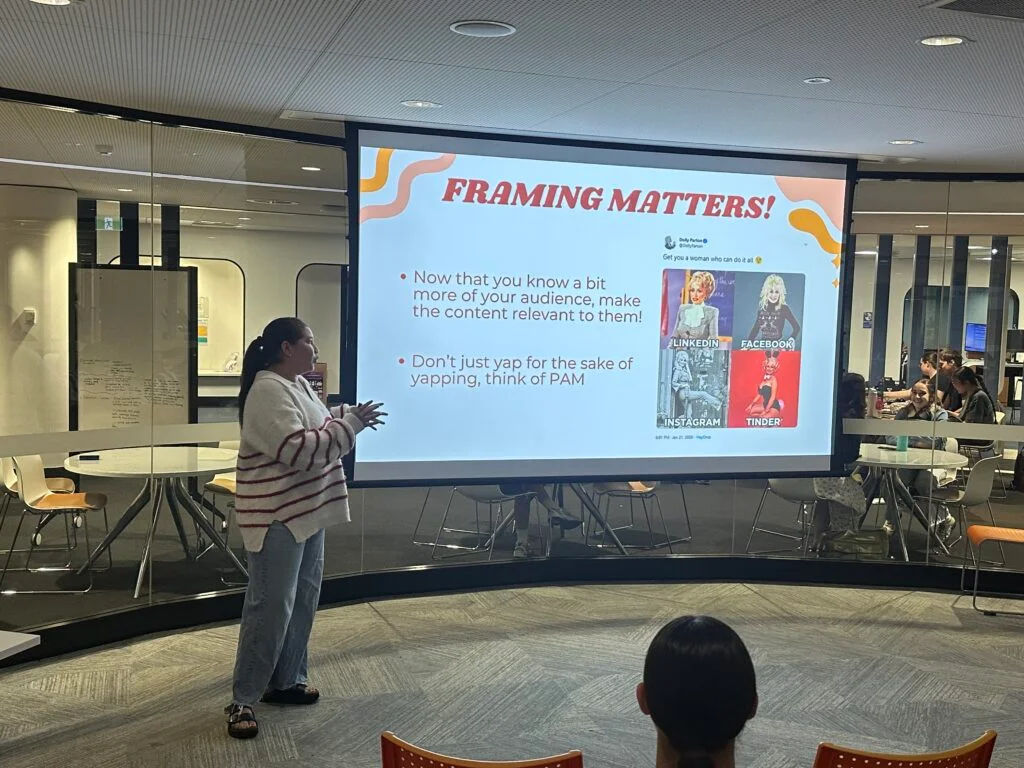
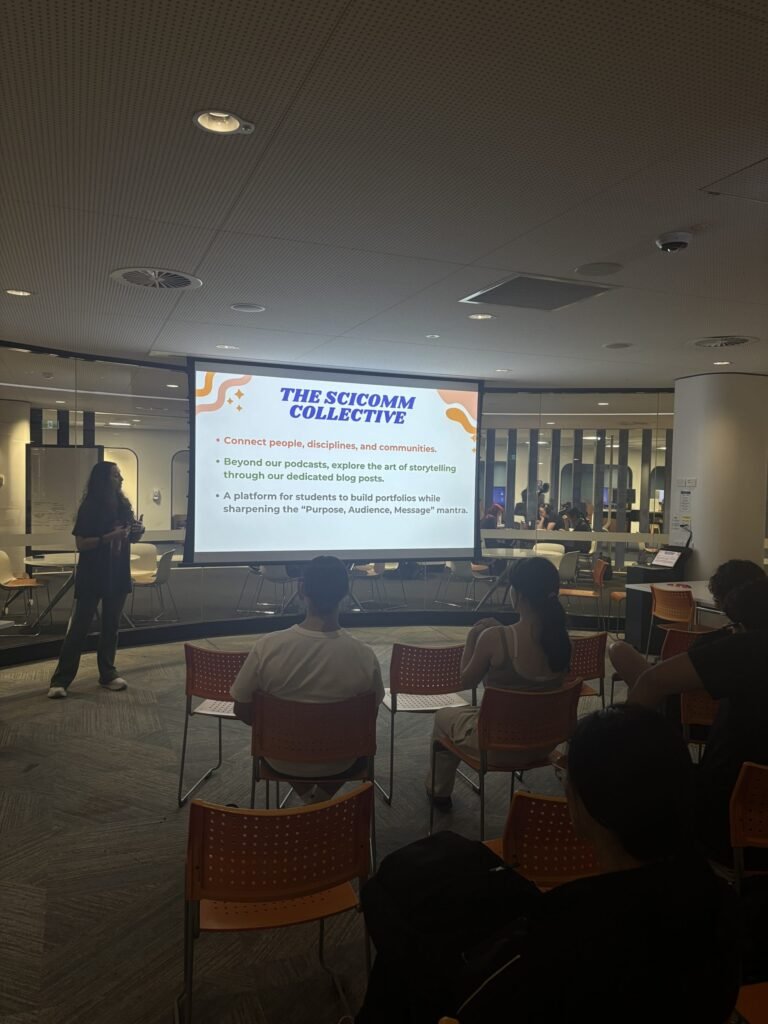
On the 25th of March 2026, The SciComm Collective participated in a Science Presentation workshop in collaboration with the Speakers Union and the Science Union.
The aim was to provide students (most of them in the natural sciences) with tips to improve their communication skills.
Communicating science is what we’ve been trained to do. More importantly, we’re all about communicating about science communication, which is why we saw this workshop as an exciting opportunity to share what we do at The SciComm Collective.
Here’s some of our reflections on the workshop.
ALL ABOUT ‘PAM’
The first thing we should address is the difference between science communication and the communication about science communication.
The former is the social conversation around science. The latter is concerned with the strategies that foster this conversation in an inclusive and engaging fashion – because it’s not simply about delivering a message unidirectionally.
To deliver communications that are not only engaging, but that respond to the needs of the audiences you hope to engage with, we need to keep in mind our friend ‘PAM’ – Purpose, Audience, Message.
As reiterated by the representatives from Speakers Union, communicating starts with knowing your audience.
For instance, think age, gender, occupation or other demographic information, all of which will give you an idea about their values, potential biases, what they might already know about a topic and other aspects that might influence the way that they engage with and interpret your message.
There’s no such thing as a faceless ‘general public’, but different audiences with diverse needs and knowledges.
Then you need to ask yourself: Why is this audience is interested in what I have to say? How can I engage them and turn my message into an actual conversation? In other words, think of the purpose of your communications.
Knowing your audience and defining your purpose will also allow you to tailor your message more effectively – including your choice of language, rhetoric appeals, channel and other visual aspects that might be more in line with the needs and interests of your audience.
SCICOMM FOR CONNECTION
Beyond the tips and theories that we shared, what made the workshop meaningful was the response from our audience and collaborators.
Steve Borinaga is the President of the Speakers Union and a student of the Master of Teaching.
“When I hear the term ‘science communication’, it perks my ears up because it’s an effective mechanism for humans to be able to articulate the awe and unexplained wonders of the natural world that might leave us all otherwise speechless,” says Steve.
“A body like The SciComm Collective is more than fit to contribute to workshop spaces for uni students looking to improve their communication skills because they can take it a step further as science-specific communicators equipped with a keen ‘know-how’ in expanding the field of science communication using diverse voices.”
This reinforces something we care deeply about – The SciComm Collective is about helping people feel confident in their voice and providing them the tools to share their work in a way that resonates with them.
And our job is not just ‘simplifying information’. It’s about fostering engagement and connection, no matter our backgrounds or worldviews.

Camila is a PhD candidate at The University of Western Australia with an interest in transdisciplinary research and inclusive science communication. When not working on her research, you will find her at her yoga studio, crocheting cute animals or raving about her cool job at Perth Zoo.

Ximena recently completed her Master of Science Communication at the University of Western Australia. All the way from Panama, she is passionate about informal learning spaces and how people engage with science – whether in museums, science centres, or outdoors. In her free time, you’ll usually find her painting, cooking, or watching a scary movie she will probably regret.
All opinions on this website are representative of individuals and are not representative of The University of Western Australia. The University of Western Australia is not liable for content herein.