English as the International Language of Science and the Illusion of Postcolonial Moments in Research

In 1967, English was officially recognised as the language of international science and, therefore, science communication – after all, science communication is strongly tied to the rules and history of science. 

Having a lingua franca or a universal language for science is often seen as advantageous because it allows scientists and science communicators to access literature and communicate with different audiences around the world. 

However, the hegemony of English can be more detrimental than beneficial as it has contributed to science and science communication being predominantly western endeavours. 

What might be an advantage to some can constitute a barrier to others when it comes to participating in scientific activities and accessing scientific information, namely non-native English speakers.  

Learning a foreign language requires time, effort and can be a costly endeavour. 

Such a barrier can hinder the participation of researchers and science communicators in international spaces and in contributing to answering scientific questions of global relevance. 

The predominance of English is also associated with the imposition of one cultural point of view, which can lead to the erasure of different cultural perspectives.  

Language is culture and language helps convey culture, including social norms and knowledge.

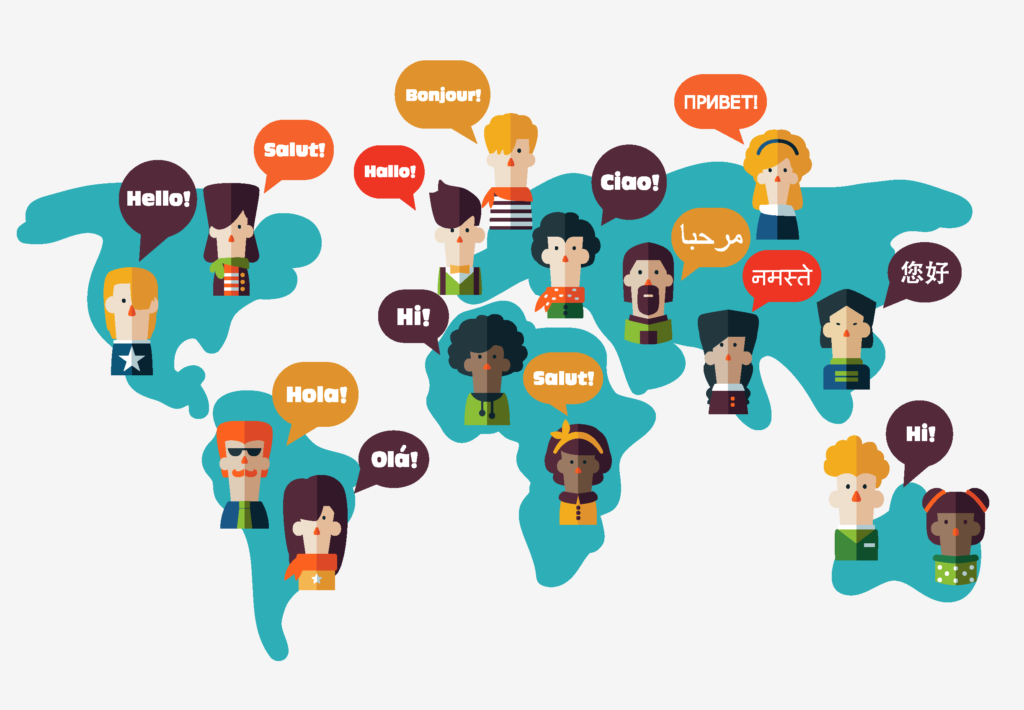
Language is a manifestation of cultural particularities and diversity. Credit: Hari Chandana via Wikimedia Commons (CC BY 4.0).

Culture is also part of a scientist’s positionality – the worldview and standpoint that determines why and how they do research –, which influences the way knowledge is produced and interpreted. 


Therefore, with the imposition of a single language in science and science communication, diverse worldviews, ways of doing, thinking and storytelling are erased from the conversation around science – thus making the institution susceptible to becoming a monolith.  


The marginalisation of linguistically diverse groups in science and science communication is a form of epistemic and linguistic assault. 


It also contributes to what has been named a cultural deficit model, in which cultural aspects and nuances of historically marginalised groups are erased or devalued – often resulting in stereotypes and the misrepresentations of these groups.  


Examples include the exclusion of letters and diacritical marks when writing words in languages like Spanish or Portuguese, or with the interchangeable use of the terms Hispanic or Latino interchangeably when referring to Spanish-speaking audiences. 


The cultural deficit model that comes with the predominance of English in science and science communication also reinforces the notion of a faceless ‘general public’ devoid of personal identities and complex social, cultural and linguistic backgrounds.  


But what are the implications of the dominance of English in the context of collaborative research and working across different knowledge systems? 


To begin with, trying to achieve a postcolonial moment in the current scientific panorama, one where different perspectives and worldviews can truly unfold, interweave and for difference to be truly enacted, can seem rather utopian.  

Communication practices are deeply rooted in cultural norms often overlooked in western scientific contexts. Credit: Kowal 2701 via Wikimedia Commons (CC0 1.0).

Scientists and science communicators must be willing to engage in horizontal relations and dialogues with linguistically and culturally diverse communities and understand the setting in which our work takes place. 

Unless we are willing to give up our preconceived epistemic notions of what valid knowledge and communication practices are, western scientific practices and the English language will continue to set the standards for what is considered ‘valid’ knowledge. 

Woman with brown hair and gold-framed glasses smiling at the camera

Camila Pardo Uribe

Camila is a PhD candidate at The University of Western Australia with an interest in transdisciplinary research and inclusive science communication. When not working on her research, you will find her at her yoga studio, crocheting cute animals or raving about her cool job at Perth Zoo.

More from The SciComm Collective blog...

Questions? Comments? Leave A Reply Here!

Share your thoughts

Your email address will not be published. Required fields are marked *

This site uses Akismet to reduce spam. Learn how your comment data is processed.

Two white conversation bubbles with a yellow play button in the middle, with the words, "The SciComm Collective" below the logo

Privacy Policy

A black swan against a brushstrokes of yellow and blue
Swan Cultural Learning by Dr Richard Walley

Acknowledgment

We acknowledge, with respect, the Whadjuk people of the Noongar Nation as the Traditional Custodians of the land on which we work and produce The SciComm Collective, and pay our respects to Elders past and present. We extend our respect to all Aboriginal and Torres Strait Islander peoples.

All opinions on this website are representative of individuals and are not representative of The University of Western Australia. The University of Western Australia is not liable for content herein.